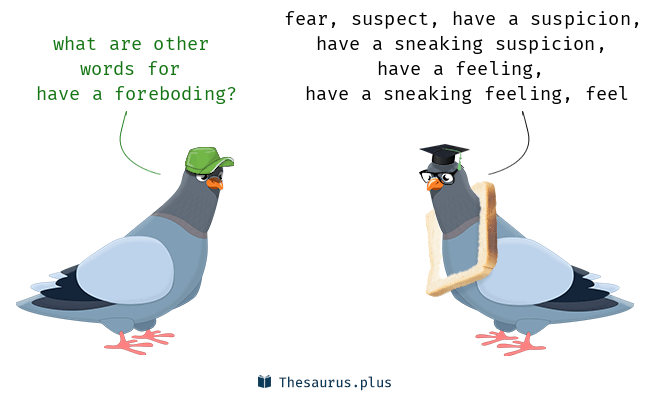
Have a foreboding
Have a suspicion and have a foreboding are semantically related. In some cases you can use "Have a suspicion" instead a verb phrase "Have a foreboding".
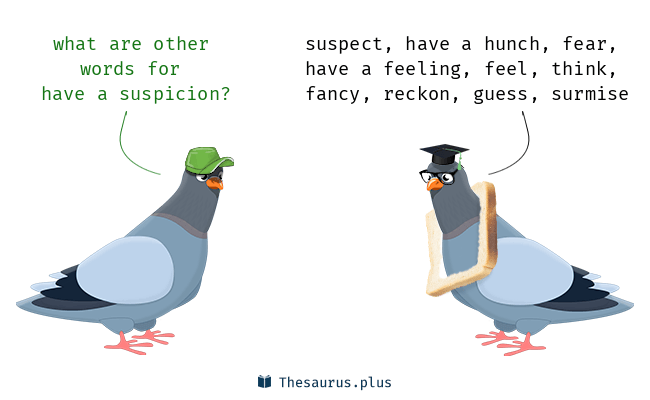
Have a suspicion
Have a foreboding and have a suspicion are semantically related. You can use "Have a foreboding" instead a verb phrase "Have a suspicion".
Mutual synonyms
Related pairs
- feel and have a foreboding
- feel and have a suspicion
- reckon and have a foreboding
- reckon and have a suspicion
- fear and have a foreboding
- fear and have a suspicion
- suppose and have a foreboding
- suppose and have a suspicion
- suspect and have a foreboding
- suspect and have a suspicion
- be afraid and have a foreboding
- be afraid and have a suspicion
- have a hunch and have a foreboding
- have a hunch and have a suspicion
Cite this Source
Have a suspicion and Have a foreboding. (2017). Retrieved 2026, July 31, from https://thesaurus.plus/related/have_a_foreboding/have_a_suspicion
Have a foreboding & Have a suspicion. N.p., 2017. Web. 31 Jul. 2026. <https://thesaurus.plus/related/have_a_foreboding/have_a_suspicion>.
Have a suspicion or Have a foreboding. 2017. Accessed July 31, 2026. https://thesaurus.plus/related/have_a_foreboding/have_a_suspicion.